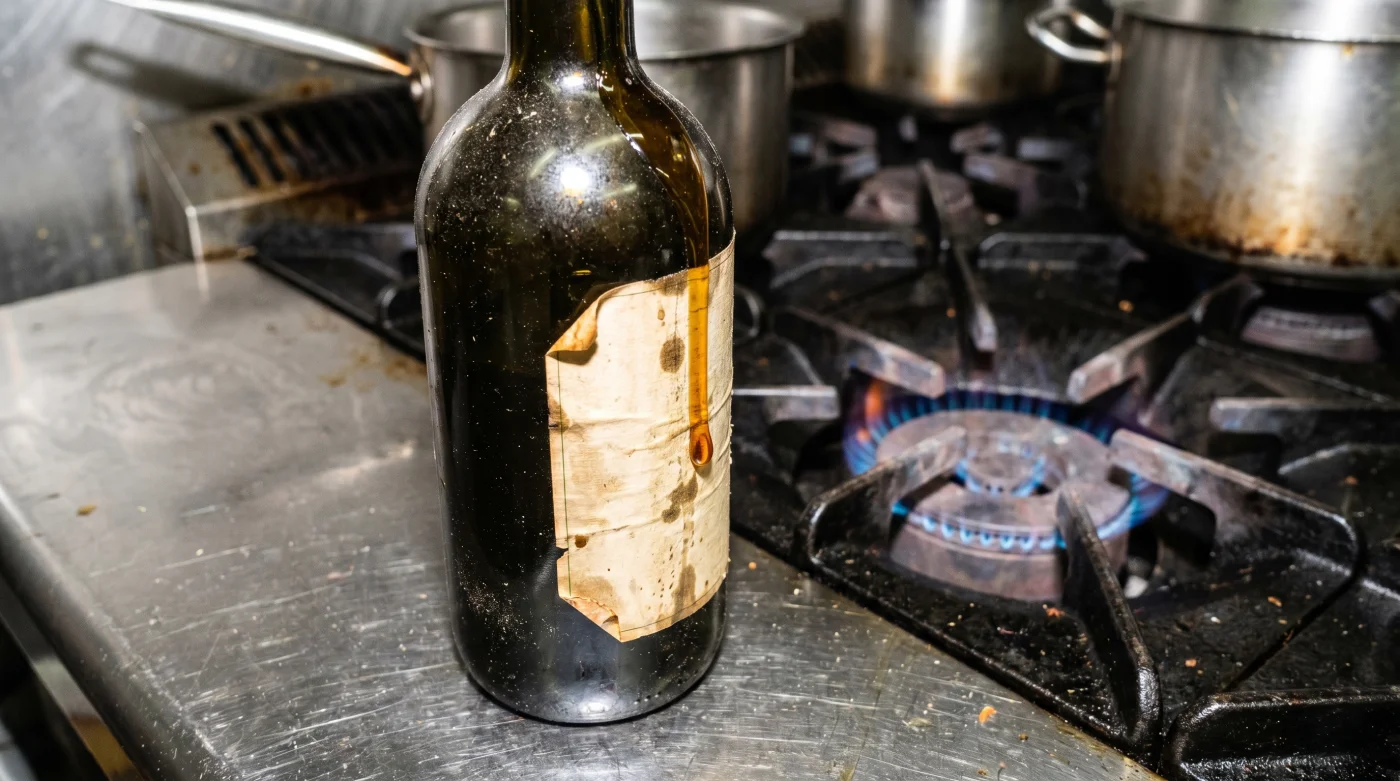
You stand by the cooker, the gentle hum of the extractor fan overhead. You reach for that familiar, dark green bottle resting proudly right next to the hob. It makes sense to keep it there; it is within arm’s reach when the garlic needs a gentle fry or the roasting tin needs a quick slick of fat. The convenience is undeniable, turning the choreography of evening meal preparation into a seamless dance.
Yet, as the radiant heat warms the kitchen, an invisible, rapid degradation is taking place inside that glass. That comforting proximity is destroying the delicate chemistry of your expensive extra virgin olive oil. What feels like an innocent habit is, chemically speaking, a relentless assault on a highly unstable natural product.
Every time you boil pasta, steam vegetables, or simmer a Sunday ragù, the ambient temperature around the cooker spikes dramatically. Inside that nearby bottle, the prized polyphenols—the peppery, throat-catching antioxidants you paid good money for—are quietly suffocating. The heat forces the organic compounds to break down, turning a vibrant, peppery ingredient into tired, rancid fat.
You might notice a slightly waxy smell when you pop the cork, or a surprisingly flat, greasy finish on your fresh tomato salad, assuming the bottle was simply a bad batch from the supermarket. The truth is much simpler and entirely preventable: you are slowly cooking it before it even touches the frying pan. The degradation takes only days, stealing the precise flavours that justified the premium price tag.
Treating Oil Like Fresh Fruit
Most of us treat olive oil like vinegar or coarse sea salt—a static, immortal pantry staple that can sit on the worktop indefinitely. But extra virgin olive oil is fundamentally a fresh fruit juice. It is alive, fragile, and desperate for preservation. Once the olive is crushed, the clock starts ticking, and the resulting liquid begins a slow decline that we can only hope to delay.
When you subject this delicate liquid to the fluctuating micro-climate of your hob, it reacts like butter left out in the midday sun. Heat accelerates oxidation relentlessly, transforming those sharp, grassy notes into an exhausted and hollow shadow of their former selves. The volatile aromatic compounds simply evaporate into the headspace of the bottle.
The perspective shift required is straightforward: stop viewing that green bottle as an indestructible cooking tool and start treating it as a highly perishable botanical extract. The minor inconvenience of opening a cool, dark cupboard door preserves months of distinct flavour and nutritional value. You are no longer just storing an ingredient; you are actively guarding its vitality.
The Sensory Analyst’s Warning
Meet Marco Vettori, a 46-year-old sensory analyst who consults for independent delis and high-end restaurants across Manchester. He spends his days in a quiet tasting room, swirling small blue glasses of imported oils, diagnosing why expensive bottles lose their bite. The first question he asks a disappointed home cook is where they keep the bottle. If it lives by the hot hob, he notes, you might as well pour £20 straight down the sink. He insists we treat it like an iron skillet when we should treat it like fresh milk.
Protecting Your Liquid Gold
Not everyone interacts with olive oil in the same way, and your specific storage strategy should reflect your daily cooking habits. The rules of preservation adapt depending on how quickly you consume a bottle and what you use it for.
For the Daily Drizzler
If you exclusively finish dishes with a high-quality extra virgin oil, its physical location in the kitchen dictates its lifespan. Move your premium bottle to a low, cool cupboard well away from the oven’s radiating warmth. Darkness is your greatest ally here, keeping those peppery polyphenols sharp and potent for your next mozzarella salad or sourdough slice.
For the Bulk Buyer
Buying five-litre tin cans saves a considerable amount of pounds sterling, but the decanting process is where things often go wrong. If you decant your bulk oil into a clear glass bottle and leave it sitting on the kitchen island, both light and ambient warmth will spoil the entire batch within weeks. Always use opaque, airtight containers for your active supply, leaving the heavy tin in the coolest room of the house.
For the Occasional Fryer
Perhaps you only use a standard splash of olive oil to start a pan of chopped onions a few times a week. Even your basic cooking oil deserves a stable temperature to prevent it from going rancid. Store it in a thick ceramic cruet rather than thin glass. Keep it completely out of sunlight and purposefully away from the radiating warmth of the kettle, toaster, or microwave.
Mindful Application and The Tactical Toolkit
Reorganising your kitchen for better oil preservation requires only a few deliberate, mindful changes. It is about creating a consistently stable, cool environment that respects the fragility of the fat. Think of it as putting the oil to sleep rather than leaving it on active duty.
By shifting your habits slightly, you guarantee that every pour retains its original grassy punch from the first drop to the last. Implement these minimalist actions today to halt the degradation immediately and protect your culinary investments.
- Relocate all olive oil to a lower cupboard that does not share a partition wall with the cooker, oven, or the dishwasher.
- Maintain an ideal ambient storage temperature hovering between 14°C and 18°C.
- Always secure the cap tightly immediately after use to cut off oxygen exposure, which fuels rancidity.
- Wash and thoroughly dry any reusable decanters before refilling; old, sticky residue will instantly infect the fresh oil.
If you absolutely must have oil available directly at the cooking station for the sake of speed, decant only enough for two or three days of cooking into a tiny, opaque stainless steel dispenser. This ensures the bulk of your oil remains safely in the dark.
A Quiet Act of Respect
Mastering this small, seemingly mundane kitchen detail does far more than preserve a few milligrams of antioxidants. It subtly shifts your entire relationship with the food you consume, fostering a deeper respect for raw ingredients. You begin to see your pantry not as a dead storage space, but as a resting place for living, breathing produce.
When you protect the fragile chemistry of that oil, you honour the months of growth beneath the Mediterranean sun, the careful harvest, and the cold pressing that brought it across the miles to your kitchen. That sharp, slightly peppery catch at the back of your throat is the direct reward for paying attention. You stop wasting money on compromised, flat flavours and start experiencing your daily food exactly as it was intended to taste.
Good olive oil is a fleeting luxury; guard it from the heat and light, and it will reward you with life.
| Storage Method | Chemical Impact | Added Value for the Reader |
|---|---|---|
| Next to the hob | Rapid polyphenol breakdown and oxidation. | None. Costs you money through wasted flavour. |
| Clear bottle on worktop | UV light degrades chlorophyll into pro-oxidants. | Visible convenience, but spoils oil within weeks. |
| Cool, dark cupboard | Preserves antioxidants and volatile aromatic compounds. | Ensures maximum health benefits and pristine taste for months. |
Frequently Asked Questions
Does all olive oil degrade near heat?
Yes, whether it is standard cooking oil or premium extra virgin, heat accelerates rancidity in all liquid fats.Can I store olive oil in the fridge?
It is not recommended. Refrigeration causes condensation inside the bottle, and moisture ruins the oil just as quickly as heat.How long does extra virgin oil last once opened?
If kept in a cool, dark cupboard, a sealed bottle retains peak flavour for about two to three months.Why are most bottles made of dark green glass?
The tint filters out harmful UV light, slowing down the photo-oxidation process that causes the oil to taste stale.Is cloudy olive oil safe to use?
Cloudiness in unfiltered oil is natural, but if it smells like crayons or old walnuts, the fat has gone rancid and should be discarded.