Picture the scene. The kitchen is finally quiet, save for the faint crackle of a cooling hob. You have just seared a flawless ribeye, the crust exactly as you wanted it, but sitting on the iron grate is the heavy, blackened aftermath.
A stubborn crust of carbon clings to the bottom of your favourite pan. For years, you have likely been told to treat this metal with extreme caution, warned that a single drop of washing-up liquid or a harsh scourer will instantly destroy months of careful seasoning.
So you stare at the charred remains, hesitant, wondering if you should just wipe it with a paper towel and hope for the best. But a greasy, bumpy surface is not seasoned; it is just dirty, and cooking on it again will only lead to bitter flavours and sticking food.
The professional kitchen reality is starkly different from the domestic panic. Cooks do not tiptoe around their cast iron. They know how to strip away the debris without touching the vital non-stick layer beneath, relying on a deeply simple, ancient pantry staple.
The Polymer Shield and the Abrasive Truth
We tend to think of pan seasoning as a delicate, painted-on film, terrified that any friction will leave us with bare, rusting metal. In reality, a proper cure is formed through polymerisation, where fats break down and bond intimately to the iron.
A resilient, plastic-like shield is what actually protects your pan. Think of it more like the hardened tarmac of a motorway rather than a fragile coat of varnish. The black crust left behind by your sausages or Sunday roast is not part of this shield; it is just burnt food sitting on top.
The secret to separating the two lies in an ingredient sitting in your cupboard right now: coarse sea salt. Rather than dissolving the oils like soap attempts to do, salt physically knocks the burnt pieces loose.
A dry salt abrasion acts as a perfectly calibrated exfoliant. It is hard enough to shatter and dislodge the brittle carbonised food, but entirely incapable of scratching the chemically bonded oil layer beneath. You are simply sweeping the tarmac, leaving the road entirely intact.
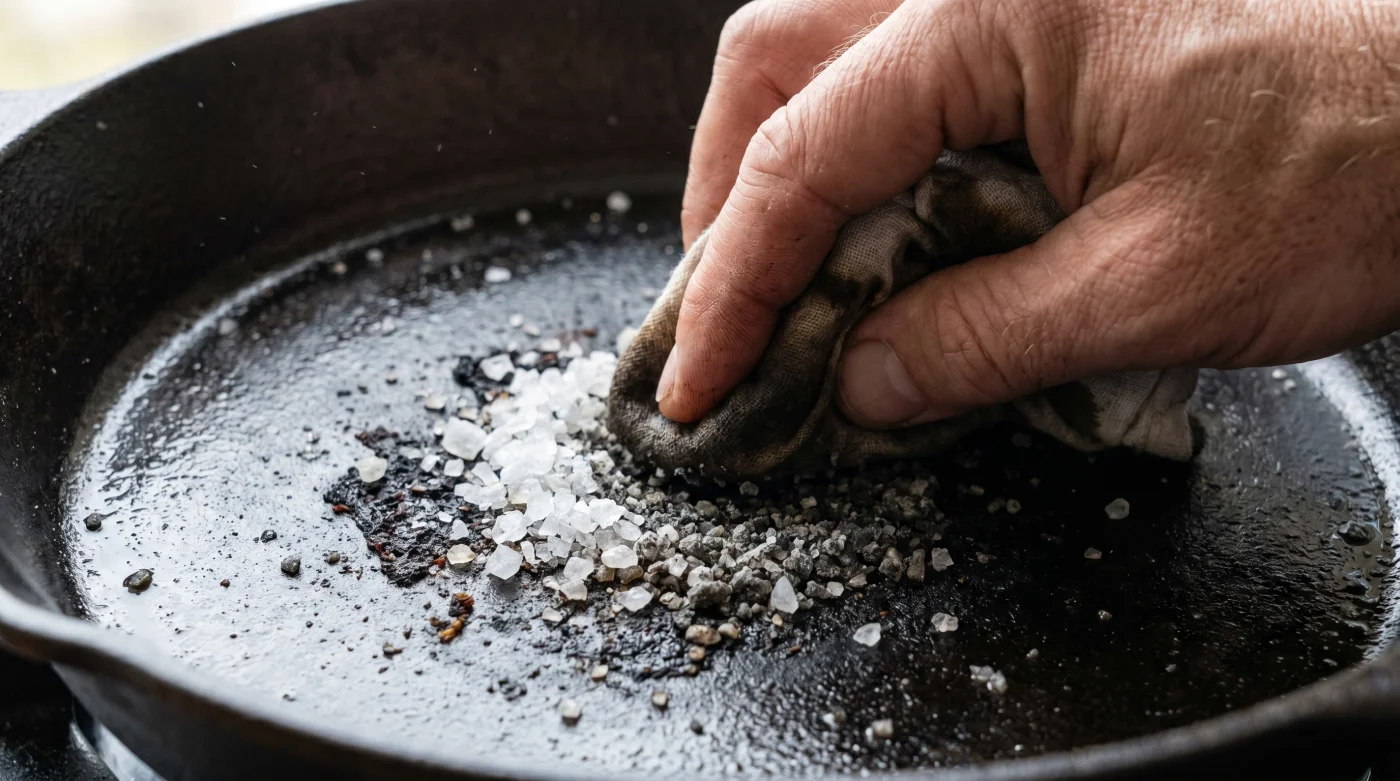
Consider Arthur, a 54-year-old head chef at a bustling gastropub in rural Yorkshire. Every Sunday, his kitchen pushes out hundreds of charred Yorkshire puddings and seared cuts of beef using a small fleet of battered cast iron skillets. He does not own wire wool or expensive chainmail scrubbers. When the service ends, Arthur simply throws a handful of coarse Cornish sea salt into the still-warm pans, grabs a folded cloth, and scrubs in tight circles until the black debris lifts away. He finishes with a brief rinse, dismantling the myth that these pans need constant pampering.
Categorising the Carbon Damage
Not every charred mess requires the exact same treatment. Understanding the physical state of your pan dictates the intensity of your response, saving you unnecessary effort.
For the Morning After
This is the light residue left from frying an egg or rendering bacon fat. You do not need heavy friction here. A simple pinch of flaky salt and a quick wipe with dry kitchen paper will absorb the excess moisture and lift the microscopic bits of protein before they harden.
For the Sticky Residue
Starchy vegetables and potatoes often leave a stubborn, gluey film that refuses to wipe away. Here, the salt acts as a binding agent. Mixing salt with a splash of neutral oil creates a thick, gritty paste that rolls over the starch, pulling it away from the pan surface without the need for water.
For the Scorched Earth
When you have seared a steak or accidentally burnt a sugary marinade, the carbon is thick and rock-hard. This requires a generous handful of coarse rock salt and a bit of residual heat. The coarse grains act like miniature chisels, breaking the charred sugar bonds.
The Tactile Routine of Salt Scrubbing
Reclaiming your heavy pan should never feel like a punishment. It is a simple, tactile routine that takes less than three minutes when done mindfully, bringing a sense of order back to your kitchen.
Start while the metal is warm. A cold pan grips onto fats like a clenched fist, making the carbon feel immovable. Wait until the iron is comfortable to handle but still radiating a gentle, soothing heat.
- Pour a generous tablespoon of coarse sea salt or rock salt directly into the centre of the pan.
- Take a folded, dry tea towel or a thick wad of kitchen paper.
- Press down firmly and rub the salt in small, deliberate circles, focusing intensely on the rough patches.
- Watch as the pristine white salt turns a murky grey, absorbing grease and collecting the shattered carbon.
- Discard the dirty salt into the bin, wipe the surface clean, and apply a microscopic drop of fresh oil to protect from the air.
Your simple tactical toolkit requires nothing electric or expensive. Just basic coarse salt, a heat source, and the steady friction of your own hands are enough to maintain a lifetime of non-stick cooking.
The Freedom of Resilient Cooking
When you stop treating your kitchen equipment like fragile artefacts, you begin to cook with far more confidence. The fear of ruining the cure often stops us from getting the pan hot enough for a proper, restaurant-quality sear.
Knowing you can reset the surface changes your entire approach. You realise that a burnt-on mess is not a permanent disaster or a ruined weekend; it is just a minor hurdle waiting for a handful of salt.
You are no longer a hostage to the myth of the unwashed pan. You can enjoy the loud sizzle, embrace the high heat, and trust that the simple physics of salt and iron will always bring things back to a pristine, ready state.
Cast iron is forged in fire; it will not surrender to a handful of sea salt and a bit of elbow grease.
| Key Point | Detail | Added Value for the Reader |
|---|---|---|
| The Exfoliant | Coarse salt crystals shatter carbon without scratching polymer layers. | Removes burnt food quickly without resetting months of seasoning. |
| The Lubricant | Warmth and residual cooking fat bind with the salt. | Prevents the need for harsh detergents that break down oils. |
| The Application | Using a folded tea towel to rub in tight, deliberate circles. | Keeps hands clean and provides even pressure across the surface. |
Common Cast Iron Queries
Can I use standard table salt? Table salt is too fine and dissolves easily; you need the jagged edges of coarse rock or sea salt.
What if the pan is completely cold? Gently warm it on the hob for two minutes before scrubbing to soften the bound fats.
Should I rinse with water afterwards? You can give it a brief rinse under a warm tap, but ensure you dry it thoroughly on a hot hob immediately.
Does this method remove rust? No, salt removes carbon and food debris. Rust requires a mild acid like vinegar and a stiff brush.
How often should I do this? Only when food is physically stuck or burnt onto the surface. A simple wipe is enough for everyday use.