You know the exact feeling. Your hand rummages through the chilly depths of the bottom salad drawer, fingers brushing against a crinkled, slightly damp plastic bag. Inside lies a solitary carrot, perhaps a remnant of last week’s Sunday roast, now bending with the melancholic flexibility of a damp thicket. The skin is crinkled, the bright orange hue seems muted, and the vegetable droops over your palm like a tired piece of rope. It is a quiet, frustrating moment familiar to anyone who tries to keep a well-stocked kitchen.
The immediate instinct is to toss it straight into the green food waste bin. We have been conditioned to view the instinct to bin soft vegetables as a perfectly normal reaction to a lost cause, a sign of irreversible decay that has no place on our pristine chopping boards. You might feel a brief pang of guilt about the wasted few pence, but you quickly justify it by telling yourself that a rubbery carrot will ruin the texture of whatever meal you are about to prepare.
Yet, this seemingly spoiled root is rarely past its prime. It is simply dehydrated. Beneath that softly wrinkled outer layer, the intricate cellular structure remains entirely intact, waiting quietly for a rather straightforward, purely mechanical intervention. The carrot has not died; it has merely exhaled too much of its internal moisture into the dry, circulating air of your refrigerator.
By understanding a basic biological principle, you can turn a bin-bound tragedy into a loud, satisfying snap that rivals the freshest produce you could pick up at your local farm shop on a frosty Saturday morning. It requires no special equipment, no expensive powders, and minimal effort. You are simply stepping in to reverse the natural effects of evaporation.
The Cellular Sponge: Rethinking Vegetable Vitality
To grasp why a root vegetable goes soft, you must view it not as a solid, lifeless block of matter, but as a microscopic, living sponge. Carrots, parsnips, and radishes rely on internal water pressure, scientifically known as turgor, to maintain their rigid, upright posture. Every single cell is like a tiny, water-filled balloon pressing tightly against its neighbours, creating the dense, heavy crunch we associate with freshness.
When left lingering in a cold, dry environment without proper protective wrapping, the moisture slowly evaporates through the permeable skin. The cell walls collapse inward, creating that unappealing, pliable texture you dread finding when you are halfway through preparing a mirepoix. The structure has not broken down; it has simply deflated, losing the hydraulic pressure that made it firm in the first place.
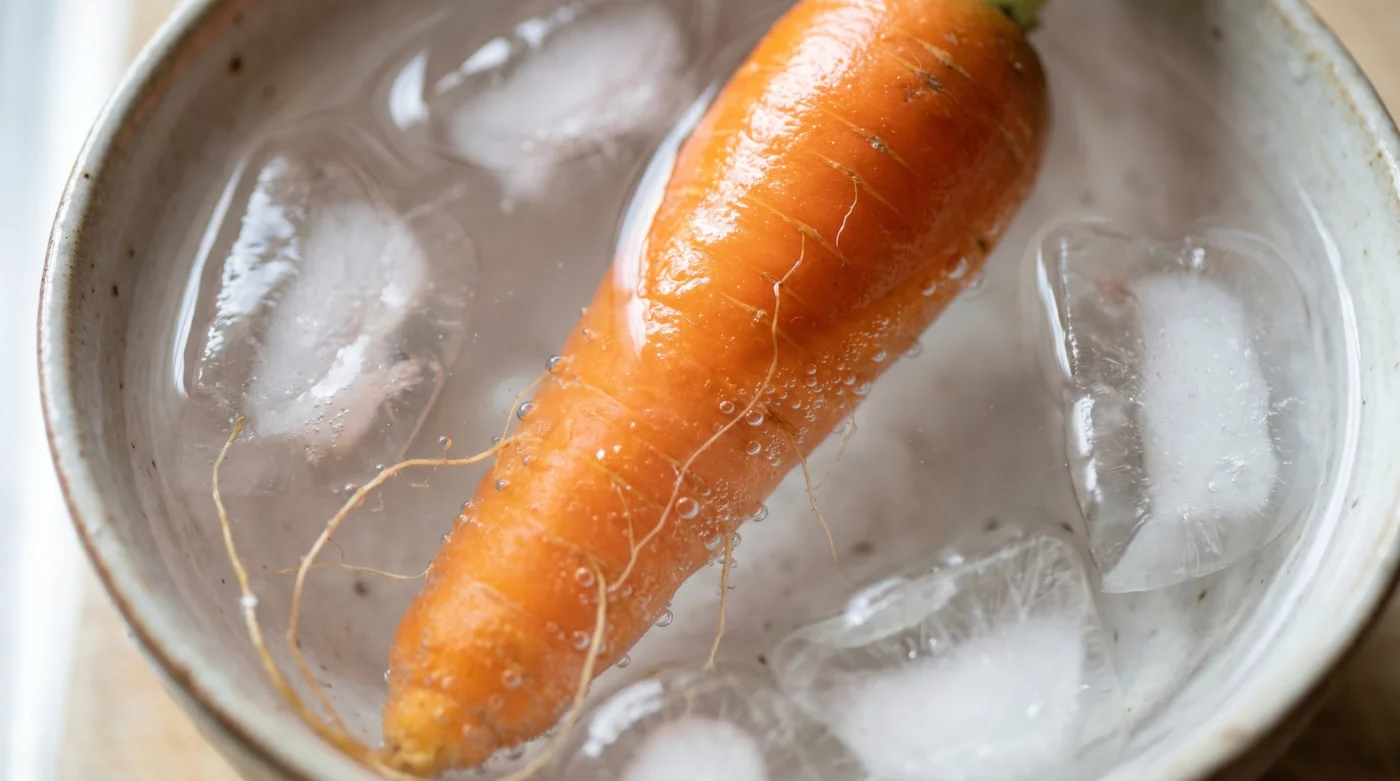
The magic lies entirely in the process of osmosis. By submerging this dehydrated root in a highly concentrated bath of freezing water, the fluid naturally forces its way back through the cell membranes. The cold water acts as an aggressive hydrator, rushing into the depleted cells and re-inflating those microscopic balloons until the vegetable regains its original, unyielding tension.
This shift in perspective completely transformed the kitchen routine of Harriet, a 45-year-old zero-waste chef running a bustling small pub kitchen in the Cotswolds. Facing mounting supplier costs and a strict budget of just a few hundred pounds a week for fresh produce, she could ill afford to chuck away tired veg. One chilly Tuesday morning, while prepping for a busy lunch service, she began snipping the tips off her flaccid carrots and plunging them into ice-filled Kilner jars overnight. The next morning, they emerged with an aggressive, echoing crunch, saving her kitchen entirely from unnecessary waste and fundamentally altering how she managed her larder.
Strategic Provisioning for Every Kitchen Habit
This simple revival method adapts effortlessly depending on how you intend to cook and prep for the week ahead. It proves that clever pantry management is not about buying more produce to ensure you always have fresh stock, but rather understanding how to manipulate what you already possess.
Whether you are an obsessive planner or an improvisational cook, you can weave this strategic pantry management into your daily rhythm. By categorising your needs, you can tailor the osmosis trick to suit the exact shapes and textures required for your upcoming meals, ensuring nothing goes into the compost bin prematurely.
- Scoring cold dough just before the oven yields the exact bakery-style ear
- Scrubbing cast iron with coarse salt removes stubborn carbon without stripping the seasoning
- Storing your extra virgin bottle next to the hob destroys its polyphenol count in days
- Adding double cream before the heat is reduced triggers immediate separation
- Chefs confirm this two-ingredient batter adjustment guarantees a flawless rise every time
For the Batch Preparer
If you are sorting out the vegetables for a massive weekend stew or a large tray of honey-glazed roasting roots, you can treat your wilted carrots whole. Take a sharp knife and snip a mere five millimetres off the very bottom tip to expose fresh, unhealed tissue.
This small cut allows the maximum surface area absorption for the water to rush up the central core of the vegetable. Plunge the whole roots into a deep jug of ice water, ensuring the newly cut tip is entirely submerged, and leave them in the fridge overnight. By morning, they will be as hard as wood, ready to be peeled and chopped into chunky, robust pieces.
For the Lunchbox Packer
Perhaps you need crisp batons to accompany a midweek hummus dip or a sharp cheddar ploughman’s lunch. Waiting twelve hours for a whole carrot to rehydrate might not fit your frantic evening schedule when you are trying to pack boxes for the next day.
Instead, slice the tired carrot into the required sticks before dropping them directly into the icy bath. Exposing the inner flesh accelerates the osmosis process dramatically, delivering perfectly rigid crudités in just a couple of hours. You can leave the jar of batons in the fridge permanently, pulling out crisp sticks exactly when you need them.
For the Frugal Forager
For those looking to stretch their food budget to the final penny before payday, this technique works equally well on an entire spectrum of sad-looking bottom-drawer residents. Limp radishes, bending celery stalks, and floppy parsnips all respond to the exact same biological trigger.
The approach remains identical across the board, establishing a calm, deliberate kitchen habit. You merely expose a fresh cut, submerge in freezing water, and let the quiet forces of physics do the heavy lifting while you sleep.
The Rehydration Ritual
Executing this technique requires nothing more than ordinary tap water and a handful of ice cubes. It turns a panicked, last-minute salvage operation into a mindful, satisfying ritual that connects you more deeply with the food you consume.
- Wash the vegetable thoroughly under the cold tap to remove any lingering soil or loose, decaying skin.
- Slice away the dry, calloused root tip with a sharp knife to physically open the capillary channels.
- Fill a tall glass jar or an airtight plastic container with heavily iced water.
- Submerge the vegetables completely, ensuring no parts are left bobbing above the surface exposed to the air.
- Leave the container in the coldest part of your fridge for a minimum of four hours, or ideally overnight for a complete structural reset.
The Tactical Toolkit for this operation is brilliantly minimalistic. You should aim for a water temperature just above freezing, around one to two degrees Celsius. A standard glass mason jar works best, as glass conducts the cold efficiently, whereas thick plastic can sometimes insulate the water too effectively from the ambient chill of the fridge.
Reclaiming the Value of Your Larder
Mastering this single, unassuming trick does far more than save a few pennies on your weekly shop. It represents a subtle but powerful change in how you navigate your domestic life, moving you away from a careless throwaway culture and towards a more resourceful, resilient way of cooking.
When you stop viewing slightly tired produce as outright rubbish, you relieve the intense pressure of having to cook everything immediately after returning from the supermarket. You quite literally buy yourself time, allowing your weekly meals to be dictated by craving and creativity rather than the ticking biological clock of a salad drawer.
In the end, taking a brief moment to care for your ingredients creates a quieter, more satisfying kitchen environment. The loud snap of a freshly revived carrot under your knife is not just a minor culinary victory; it is a quiet rebellion against waste. It is the satisfaction of knowing you have outsmarted the system, coaxing perfection out of the imperfect, and treating your food with the respect it truly deserves.
‘A limp vegetable is not a failure of freshness, but merely an invitation to practice the quiet art of rehydration.’
| Key Point | Detail | Added Value for the Reader |
|---|---|---|
| The Root Snip | Removing the bottom five millimetres of the carrot before soaking. | Opens the dried capillary pathways, speeding up water absorption by several hours. |
| Ice Water Temperature | Maintaining the soak at roughly one to two degrees Celsius. | Keeps the cellular walls firm while they swell, entirely preventing a soggy or waterlogged texture. |
| Container Choice | Using a tall, glass airtight jar rather than a shallow bowl. | Ensures complete vertical submersion and maintains a consistent, deep chill throughout the entire night. |
Frequently Asked Questions
Can I use this method on carrots that have already been peeled?
Yes, peeled carrots respond even faster to the ice bath, as there is no outer skin to slow the osmosis, though they should be eaten within two days of rehydration for the best flavour.What if the vegetable has gone slightly slimy to the touch?
If the surface is slimy or smells distinctly sour, the vegetable has begun to rot and must go straight to the compost bin; this trick only fixes dehydration, not decay.Does this exact technique work for leafy greens as well?
Absolutely, a quick ten-minute plunge in heavily iced water will shock wilted lettuce, spinach, or delicate herbs right back into a beautifully crisp state.Should I add a pinch of salt to the ice bath to help it along?
Never add salt. Salt water will cause reverse osmosis, aggressively drawing even more moisture out of the root and leaving your veg considerably softer than before.How long do the vegetables stay crisp after the overnight soak?
Once fully revived, store them submerged in fresh, cold water in the fridge, and they will easily maintain their aggressive crunch for up to five days.