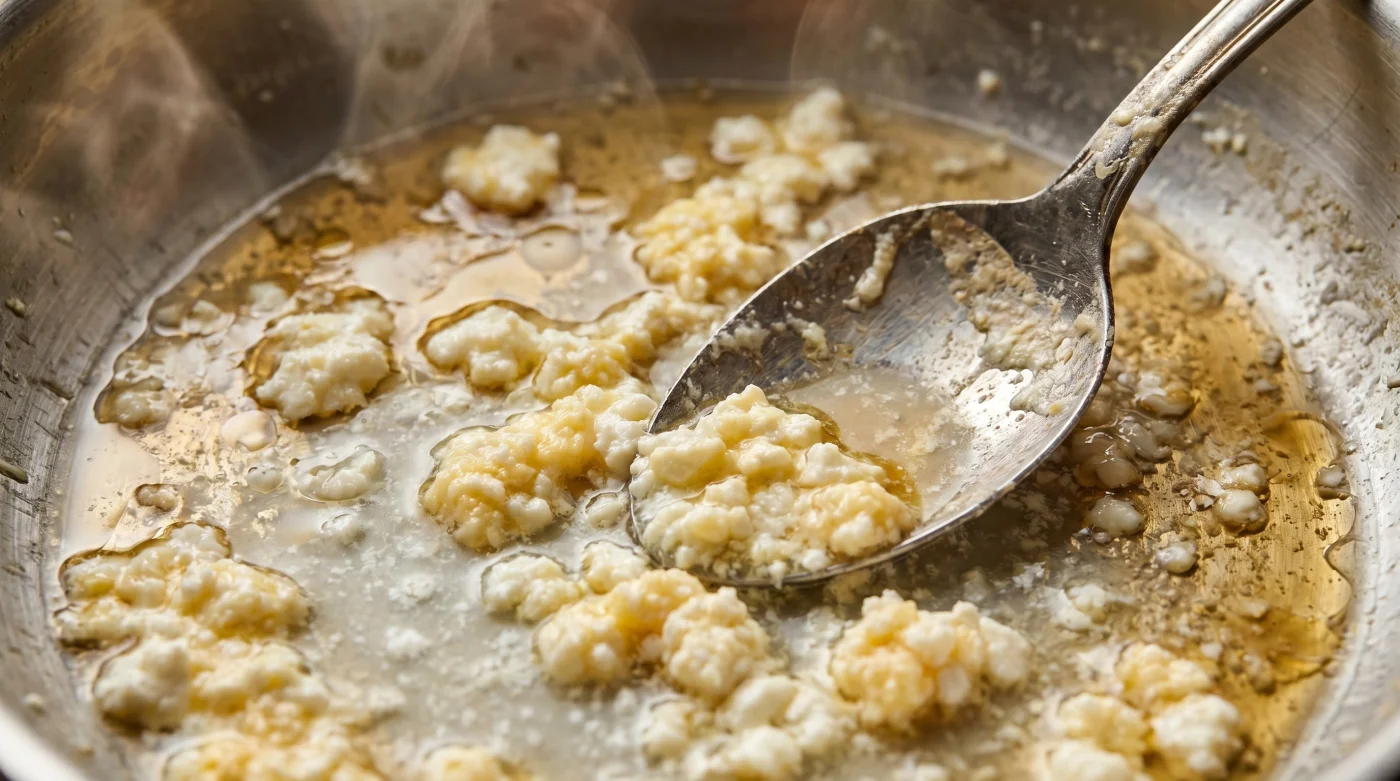
The kitchen smells of browned butter, roasted garlic, and the sharp tang of reduced white wine. You have spent the last forty minutes coaxing flavour from a heavy iron pan, watching the liquid cook down to a sticky, concentrated glaze. The shallots have softened into sweet submission, and the pan is hissing, bubbling furiously on the hob as the last drops of moisture evaporate.
Now comes the final touch, the moment that brings the dish together. You reach for the carton of double cream, tilting it over the rolling boil to finish your sauce, expecting a sudden wave of velvet richness to coat the back of your wooden spoon.
Instead, the liquid betrays you. Within seconds, the smooth surface shatters into pale, grainy curds floating in a slick of translucent yellow grease. The sauce has split, turning a carefully built dinner into an unappetising, broken broth that clings poorly to the meat and leaves a greasy film on the plate.
This is the trap of the rolling boil. The urge to cook the dairy into the sauce is an incredibly common instinct, built on the assumption that high heat equals a thoroughly blended sauce. But dairy behaves under entirely different physical rules, reacting to sudden temperature spikes with sheer chemical panic.
The Physical Panic of Dairy Proteins
Think of the proteins in double cream like tiny, tightly wound balls of yarn floating in a delicate suspension of water and fat. When left alone or gently warmed, they relax, allowing the fat molecules to slide smoothly between them, creating that thick, mouth-coating texture we crave.
When you drop cold cream directly into a boiling liquid, you subject those proteins to violent thermal shock. They seize and tighten, reacting exactly like a pure wool jumper thrown into a sixty-degree washing machine cycle. As they violently contract, they squeeze out all the water and fat they were holding onto.
The white specks you see floating in your pan are those tightened protein knots, completely divorced from the fat that is now pooling on the surface. The flaw isn’t your recipe, your stirring technique, or the brand of dairy you purchased; it is entirely about the temperature gradient at the exact moment of contact.
Recognising this shifts your approach entirely. A split sauce is not a sign of bad cooking; it is simply a failure to manage the heat transition. By controlling the environment before the dairy arrives, you command the final texture, turning a potential disaster into a guaranteed success.
This exact chemistry lesson was burned into the memory of Julian, a forty-two-year-old head chef running a busy gastropub in rural Somerset. During a frantic Sunday service, Julian watched a junior cook ruin six consecutive portions of a creamy mustard pork dish by pouring fresh double cream straight into bubbling cider pan juices.
Julian stopped the service line, pulled the pan off the heat entirely, and made the cook stare at the metal until the bubbling completely ceased. Only then did he allow the cream to be stirred into the residual warmth. The result was flawless, thick, and stable. He calls it letting the pan breathe, a mandatory rule he enforces with absolute strictness today.
Navigating Different Pan Environments
Not all pan juices behave the same way before the cream is added. The liquid currently reducing in your skillet demands slightly different tactics depending on its chemical makeup, requiring you to adapt your timing.
For the highly acidic reduction—such as white wine, dry cider, or lemon-heavy pan juices—the environment is particularly aggressive. Acid inherently destabilises dairy proteins, making them remarkably sensitive to heat. Remove the pan completely from the heat source and wait for every single bubble to stop breaking the surface before folding the cream through.
For the rich meat stock glaze, the rules shift slightly. Beef or chicken stock reductions contain high levels of gelatine, which offers a small buffer against rapid splitting. However, a rolling boil will still break the emulsion, so turn the flame off entirely for a full minute before adding the dairy.
For the starchy pasta water base, you have a natural advantage. Pasta water contains dissolved starch, a natural stabiliser that physically blocks proteins from clumping together. While this gives you a larger margin for error, high heat remains dangerous. Toss the pasta with the residual water off the hob, and add the cream while constantly moving the pan to aerate the sauce.
The Mechanics of Mindful Tempering
To permanently banish the grainy, split sauce from your repertoire, you must treat the addition of double cream as a separate, distinct cooking phase. This is about managing thermal descent rather than applying active heat.
Instead of pouring straight from the fridge to the hob, follow these practical steps to guarantee a velvet finish that looks and feels like it came from a professional kitchen:
- The Silence Test: Pull the pan off the heat and wait until the audible hissing and bubbling completely stops. The surface of the liquid should be glass-still.
- The Spoon Buffer: If your cream is fridge-cold, spoon a few tablespoons of the warm pan liquid into a small bowl with the cream. Stir this together first to gently raise the dairy’s temperature.
- The Gentle Fold: Pour the tempered cream into the main pan slowly. Do not whisk violently; use a wooden spoon to fold the liquids together in slow, broad figures of eight.
- The Warm Hold: If the sauce needs to be hotter before serving, place it back on the lowest possible heat setting. The cream should tremble, never boil.
Your tactical toolkit here consists entirely of patience, observation, and a willingness to step back. By respecting the physical limits of the ingredient, you allow the chemistry to work effortlessly in your favour.
Mastering the order of operations in your cooking provides a profound sense of relief. You are no longer crossing your fingers and hoping the sauce holds together; you understand the mechanics of the pan.
The Quiet Confidence of Patience
This tiny pause—waiting for the boil to subside before introducing the dairy—requires a level of restraint that transforms a frantic kitchen into a calm workspace. It forces you to stop, to assess the temperature, and to act with intention rather than rushing blindly toward the finish line.
When you finally spoon that thick, glossy sauce over your meal, it represents more than just a well-executed recipe. It is a physical manifestation of a volatile reaction managed with deliberate timing.
“Treat double cream with the same gentle respect as a fragile egg yolk; let the residual warmth do the heavy lifting, and the sauce will reward you with perfect stability.”
| Key Point | Detail | Added Value for the Reader |
|---|---|---|
| Thermal Shock | Dropping cold cream into boiling liquid causes proteins to knot and squeeze out fat. | Prevents the grainy, greasy texture that ruins expensive meals. |
| The Silence Test | Waiting for the pan’s bubbling and hissing to completely stop before adding dairy. | Provides a foolproof, visual cue that the temperature is safe for cream. |
| Tempering | Mixing a small amount of warm pan juice into the cold cream before combining. | Gently raises the dairy temperature, drastically reducing the risk of splitting. |
Frequently Asked Questions
Can I fix a sauce once the cream has already split?
Sometimes. Try adding a splash of cold water or a tablespoon of heavy cream, then whisk vigorously off the heat to encourage the emulsion to re-form. It won’t be perfect, but it can salvage dinner.Does single cream split easier than double cream?
Yes. Single cream has a lower fat content and higher water content, making its proteins far more vulnerable to heat. Double cream is naturally more stable, but still requires careful temperature management.Why does adding mustard help stabilise a cream sauce?
Mustard acts as a natural emulsifier. It contains mucilage, which helps bind the fat and water molecules together, offering a slight buffer against splitting.Should I let my cream reach room temperature before using it?
Taking the chill off your cream by leaving it on the counter for twenty minutes before cooking significantly reduces the thermal shock when it hits the warm pan.Can I boil the sauce after the cream is safely mixed in?
No. Even if successfully integrated, bringing a cream-based sauce back to a rolling boil will break the delicate emulsion. Keep it on a low simmer where the surface barely trembles.